Kaieteur Falls and the life beyond the view
Beyond its spectacular plunge, Kaieteur reveals rare wildlife, Patamona heritage and a living rainforest.

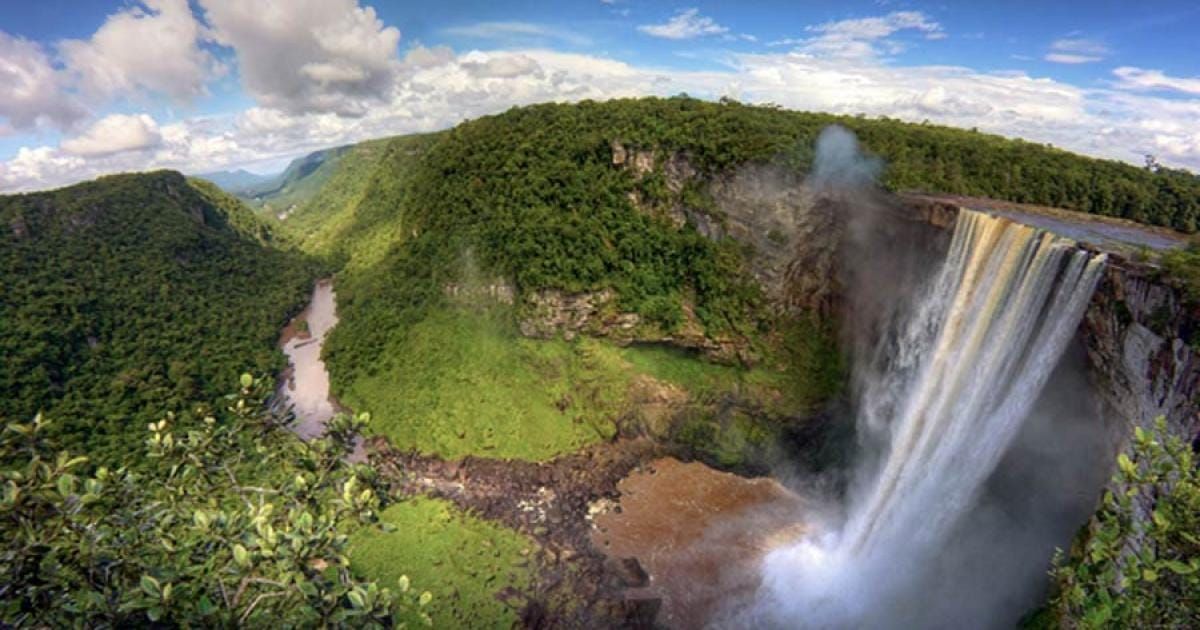
At Kaieteur, the Potaro River plunges into a forested gorge. In the surrounding landscape, golden rocket frogs depend on tiny pools of water held between bromeliad leaves.
The main plunge of Kaieteur Falls is approximately 226 metres, according to Guyana’s Protected Areas Commission.
It is an immense sight in the Pakaraima Highlands of Region Eight and the natural starting point for a visit.
But the smaller world around it is worth taking time to notice.
For Guyanese familiar with photographs of Kaieteur, a journey there offers the chance to place that familiar image within a much larger landscape of river, forest and savannah.
Visitors from overseas have the same opportunity: to see not only the falls, but the ecosystem around them.
Guided walks take visitors to several viewing points around the falls, offering different perspectives on the Potaro River as it reaches the gorge and plunges over the edge.
Between those views, the landscape changes at a much smaller scale.
Even the mist helps shape it.
The Protected Areas Commission describes a narrow strip along the gorge and splash basin where mist generated by the falls creates conditions similar to a cloud forest.
Life in a pool of leaves
One of Kaieteur’s smallest residents depends on an even smaller body of water.
The golden rocket frog, Anomaloglossus beebei, uses water collected between the leaves of bromeliads for reproduction.
Research published in Biotropica in 2018 examined how the frogs select these tiny pools — known as phytotelmata — for egg-laying and tadpole development.
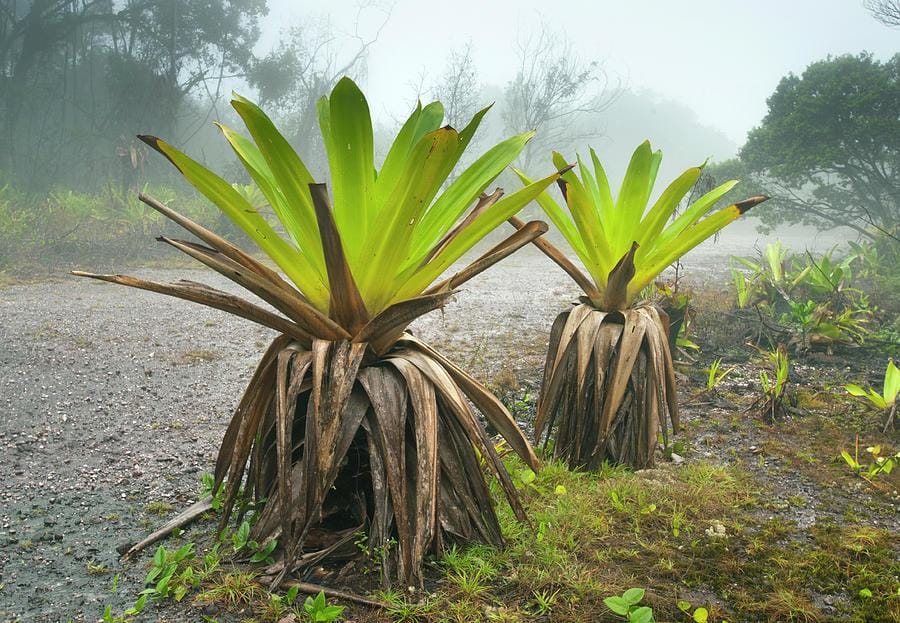
The species is closely associated with bromeliads including Brocchinia micrantha, whose leaves can hold enough water to create a miniature aquatic habitat.
A plant that might receive little attention on a walk can therefore serve as a nursery for a frog’s offspring.
There is no guarantee of seeing a golden rocket frog during a visit.
Knowing where it lives, however, gives visitors a reason to look more closely at the vegetation and to listen to what local guides can explain about the ecosystem.
A place known long before 1870
Kaieteur’s human history reaches far beyond its place in modern travel photography.
The Protected Areas Commission describes the falls as an important spiritual place and symbol for the Patamona people.
The National Trust records the arrival of a party led by geologist Charles Barrington Brown at Kaieteur on April 29, 1870.
But Indigenous communities knew the falls long before that expedition.
The date marks a visit in the historical record, not the beginning of the place’s story.
Kaieteur National Park was established in 1929, making it Guyana’s oldest protected area and the first national park established in the Amazon region.
At the request of Patamona communities, park authorities ask visitors to treat the falls with particular respect.
Activities considered incompatible with its cultural significance — including scattering human ashes over the falls and extreme sporting activities — are not permitted.
Making the journey
How visitors reach Kaieteur shapes the experience.
Several operators offer fly-in day trips from Eugene F. Correia International Airport at Ogle, generally combining the flight with a guided visit to the park.
Flights are weather-dependent and some operators require a minimum number of passengers before departure.
Overland journeys offer a very different experience, combining road, river and hiking segments and requiring considerably more time and physical preparation.
Before booking either option, travellers should confirm the itinerary, departure arrangements, park fees, ground time, cancellation conditions and what is included in the quoted price.
Weather can change plans, particularly for flights.
Comfortable walking shoes and protection from sun and rain are useful, and visitors should follow guides and park staff closely around trails and viewpoints.
The waterfall will inevitably command attention.
But at Kaieteur, some of the most interesting details are much smaller: mist gathering around the gorge, a bromeliad holding a few centimetres of water, or a tiny frog whose entire reproductive cycle depends on that miniature pool.