MV Barima inquiry hears beacon record did not identify vessel, distress coordinates sent via WhatsApp
Opening testimony reveals how distress alerts were handled and why the beacon record did not identify the MV Barima.

Opening testimony detailed how distress coordinates were relayed to the Coast Guard through WhatsApp, telephone and email after an emergency beacon activated. Published accounts differ on the beacon’s registration status, but testimony indicates the available record did not identify the MV Barima.
By Browny Times
GEORGETOWN — The emergency beacon signal associated with the MV Barima could not be matched to registration information identifying the ferry, its owner or emergency contacts when the first distress alerts were received, the Commission of Inquiry heard on Wednesday.
The MV Barima capsized on the night of July 18 while travelling from Georgetown to Port Kaituma with an estimated 179 people aboard.
In an official account published ahead of the hearings, the government reported 72 bodies recovered, 76 people rescued and 30 people unaccounted for. Other published accounts have reported 73 deaths. The commission has not yet established a final casualty count in the evidence heard so far.
Asked by Commissioner Nyree Dawn Alfonso whether the beacon was registered with the satellite system, Director of Air Navigation Services Rickford Samaroo was direct.
“From our side, it wasn’t registered,” he told the commission.
Several local news organisations reported his testimony that way.
A Department of Public Information account of the hearing, citing witnesses, reported that the beacon was registered in the United States but that the registration record did not link it specifically to the MV Barima.
The distinction has not yet been resolved in the public record.
What is clear from the testimony is that the identification information available when the alert arrived did not allow officers to immediately identify the vessel.
How the distress system works
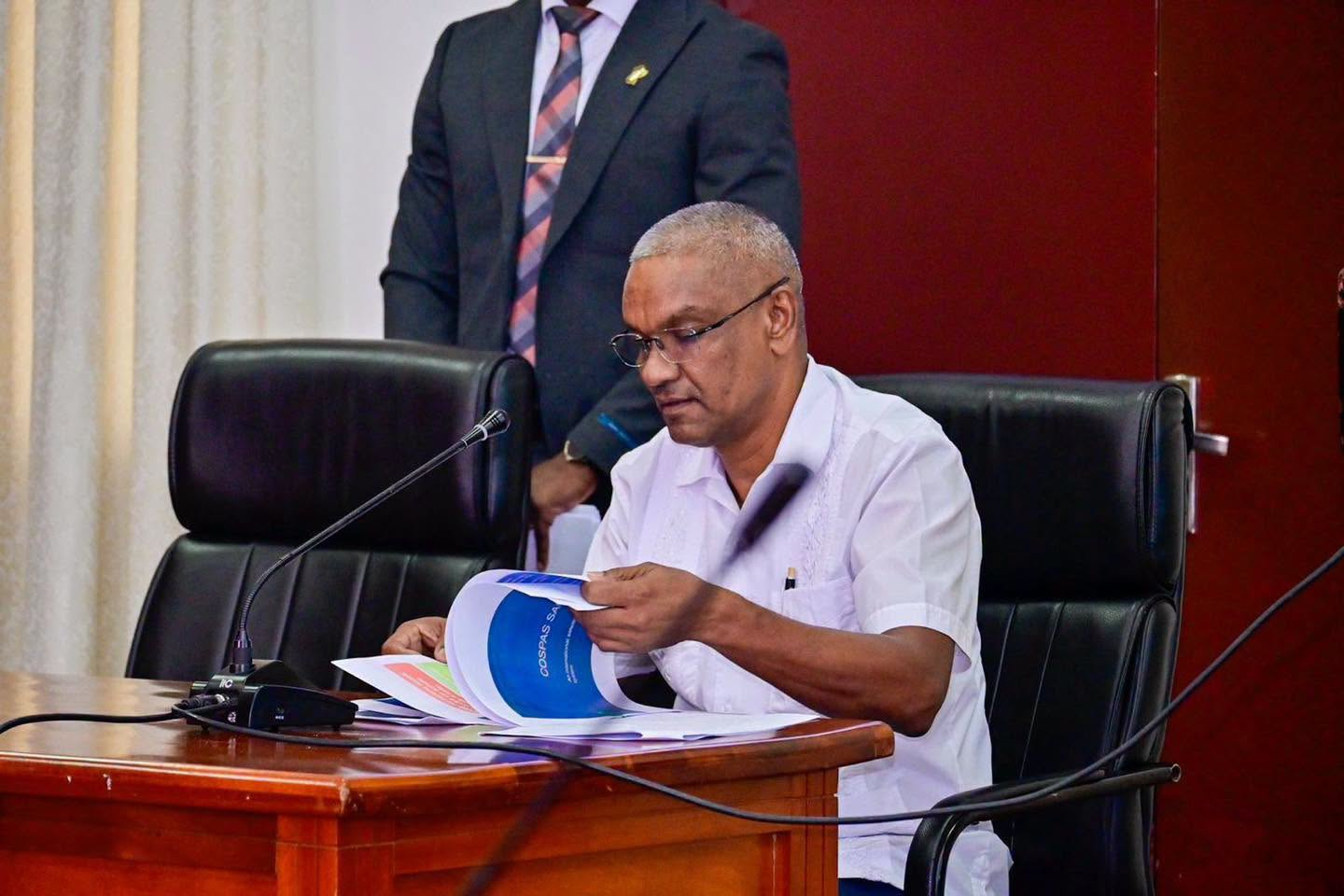
Samaroo explained that Guyana receives emergency beacon alerts through an arrangement with the United States Mission Control Centre in Maryland, which is administered by the National Oceanic and Atmospheric Administration, NOAA, as part of the international Cospas-Sarsat satellite search-and-rescue system.
The alerts are routed to the Guyana Civil Aviation Authority’s Aeronautical Information Unit at the Timehri control tower, which operates around the clock.
A beacon can transmit its unique HEX identification code and location coordinates.
Registration information can then connect that code to details such as a vessel name, owner and emergency contacts.
In the MV Barima case, the available record did not identify the ferry.
Samaroo said that meant officials could not immediately determine whether the signal was coming from the MV Barima, a fishing boat or another type of vessel.
Distress coordinates sent through WhatsApp
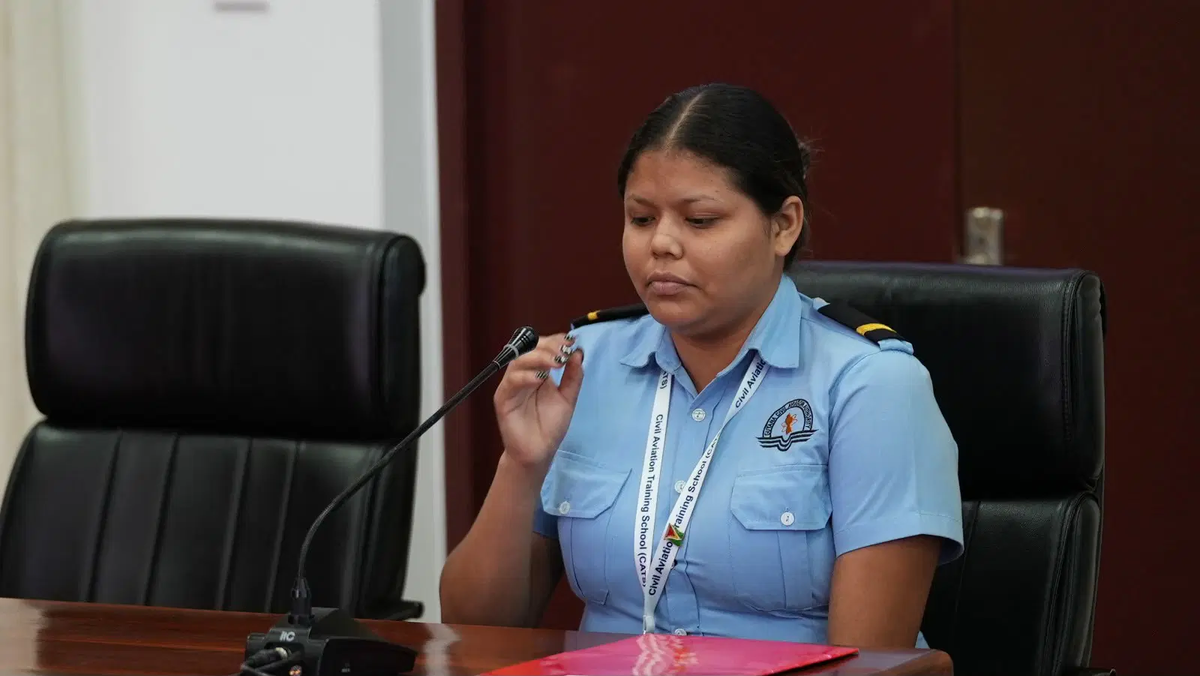
Tia Valenzuela, an Aeronautical Information Service officer with the GCAA, was on duty at the Cheddi Jagan International Airport control tower when the first distress alert arrived.
She testified that the alarm began sounding at approximately 10:43 p.m. on July 18.
Communications presented during the hearing showed that Valenzuela sent the distress coordinates to the Guyana Defence Force Coast Guard operations room through WhatsApp at 10:51 p.m.
The Coast Guard acknowledged the message at 10:52 p.m.
At 11:13 p.m., Valenzuela was advised that a Coast Guard vessel was heading towards the reported location.
At 11:14 p.m., she sent the beacon’s HEX identification information by email.
Coast Guard Commander Shamshudeen acknowledged receipt at 11:23 p.m.
Timeline of the distress alert
| Time | Event |
|---|---|
| 10:43 p.m. | First satellite distress alert received |
| 10:51 p.m. | Coordinates sent to Coast Guard via WhatsApp |
| 10:52 p.m. | Coast Guard acknowledges the message |
| 11:13 p.m. | Coast Guard advises a vessel is heading towards the location |
| 11:14 p.m. | Beacon HEX ID sent by email |
| 11:23 p.m. | Coast Guard commander acknowledges receipt |
| Approximately 1 a.m. | Air Navigation Services director learns of the emergency |
| Approximately 4 a.m. | Director is told the vessel has been located |
The commission is still examining the underlying communications records and the wider emergency-response timeline.
Officer says only one of about 10 distress alerts she handled involved a properly registered beacon
Under questioning from Commissioner Rear Admiral (Ret’d) Hayden Pritchard, Valenzuela said WhatsApp, telephone calls and email were the means available to her for relaying distress information to the Coast Guard.
She also testified that she had not been trained to coordinate a joint aviation and maritime search-and-rescue operation.
Valenzuela said that, of approximately 10 distress signals she had handled during her tenure, only one involved a beacon she considered properly registered.
That is her experience as presented to the commission. The inquiry has not established how representative it is of beacon registration across Guyana’s maritime sector.
The evidence does, however, give investigators another issue to examine: whether the registration issues described in testimony extend beyond the MV Barima.
The commission has requested the relevant standard operating procedures, an after-action report and the complete communications record from the first alert through the close of operations on the afternoon of July 19.
When were senior officials notified?
Samaroo distinguished between the first notifications sent to maritime responders and when he personally became aware of the emergency.
He testified that staff are required to notify him immediately when an aircraft is involved in an emergency.
No equivalent requirement applied to maritime distress alerts, he said.
Samaroo said staff later informed him that MARAD, the Coast Guard and lighthouse authorities had been notified within five minutes of the first alert.
Valenzuela’s evidence separately provided specific times for some of the communications with responders.
Samaroo said he became aware of the incident at about 1 a.m., when GCAA Director-General Egbert Field contacted him about a vessel potentially in distress.
Field also told him that two Roraima Airways aircraft had been authorised to assist with the search.
When Samaroo contacted the tower again at about 4 a.m., he was told the vessel had been located and a rescue operation was under way.
The testimony does not establish that the communications methods or notification structure caused or contributed to any loss of life.
It does place those procedures within the commission’s examination of the emergency response.
Questions over the ferry’s emergency equipment
The evidence also raises a question the commission will have to reconcile with earlier statements about equipment aboard the MV Barima.
Captain Kevin Price, who survived the sinking and is facing murder charges alongside two other Transport and Harbours Department employees, told reporters in July that the ageing ferry lacked several pieces of safety equipment.
Among the items he identified were radar, a Search and Rescue Transponder, or SART, and an Emergency Position-Indicating Radio Beacon, or EPIRB.
Wednesday’s hearing established that a distress beacon signal associated with the MV Barima was received through the satellite system.
The commission has not yet publicly established exactly what device generated the signal, how it came to be associated with the ferry or how that evidence relates to Price’s earlier statement.
Inquiry widens beyond the MV Barima
The commission is examining more than the circumstances immediately surrounding the ferry’s sinking.
Its mandate includes the vessel’s seaworthiness and maintenance, passenger and cargo loading, crew competence and the search, rescue and recovery response.
It has also requested records relating to the wider fleets operated by the Maritime Administration Department and the Transport and Harbours Department, not only the MV Barima.
More than 100 witnesses are expected to give evidence during the inquiry.
The commission has also said it will cover expenses for survivors who give evidence, helping those who need to travel to participate in the proceedings.
Three Transport and Harbours Department employees — Captain Kevin Price, Chief Mate Rondell Dwayne Roberts and Goods Superintendent Delon Granderson — are separately facing murder charges.
Those criminal proceedings are distinct from the inquiry, and the charges remain allegations unless established in court.
Media livestreaming restrictions raise transparency questions
The opening of substantive testimony also brought attention to how the public will be able to follow the proceedings.
Commission Secretary Javed Shadick informed media organisations that they would not be permitted to livestream the hearings, News Source Guyana reported.
Journalists may attend, record and report on the proceedings, but media livestreaming is restricted.
No public explanation was provided for that decision, and the commission has said it intends to issue standard operating procedures governing media coverage.
The commission’s procedural framework provides for public hearings while allowing directions to be issued concerning the conduct of proceedings and media access.
The restriction does not, on its own, establish that the commission has breached those rules.
It does raise a practical question, particularly for survivors and families outside Georgetown:
If media organisations cannot livestream the hearings, how will members of the wider public follow the evidence as it is presented?
The availability of official transmissions, transcripts and exhibits will be important in determining how accessible the inquiry is beyond the hearing room.
What happens next?
Wednesday’s opening testimony leaves several questions for the commission:
- What was the exact registration status of the beacon, and why did the available record not identify the MV Barima?
- Who was responsible for ensuring the vessel’s emergency beacon information was current and correctly linked?
- What device generated the distress signal?
- Why did only one of the roughly 10 distress alerts handled by Valenzuela involve what she described as a properly registered beacon?
- Were procedures for transmitting maritime distress alerts adequate?
- How quickly did each responsible agency receive and act on the information?
- Were personnel adequately prepared for a coordinated air-and-sea search-and-rescue response?
- And how will people outside Georgetown be able to follow the hearings?
The opening evidence does not resolve those questions.
It does begin to establish a documented timeline of what happened after the first distress alert — and gives the commission a clearer set of procedures, decisions and responsibilities to test as the inquiry continues.