
Pinktober in Guyana: know the signs, seek care and support one another
Know the breast changes that need medical attention, where authorities list mammography services in Guyana and why support matters beyond October.

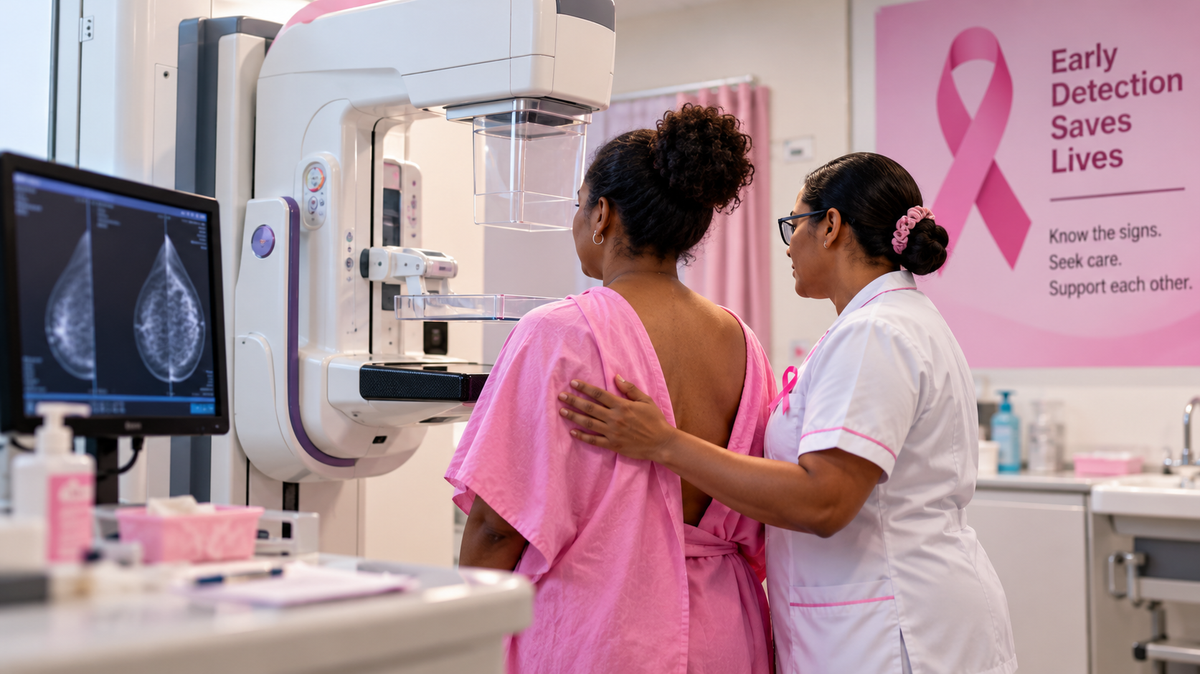
Breast cancer awareness also means recognising changes and helping people reach care.
By Browny Times
Across Guyana, Pinktober is a reminder to turn breast cancer awareness into practical action.
This October, that can mean seeing a health worker about a change in your breast, helping someone get to an appointment or listening when they need support.
The World Health Organization’s Breast Cancer Awareness Month campaign emphasises early detection, timely diagnosis and access to quality treatment and care.
Where to get a mammogram
According to the Department of Public Information, mammography services are available at five public hospitals in Guyana:
- Public Hospital Suddie, Region Two
- Georgetown Public Hospital Corporation (GPHC), Region Four
- New Amsterdam Regional Hospital, Region Six
- Lethem Regional Hospital, Region Nine
- Linden Hospital Complex, Region Ten
With mammography now available at regional hospitals, some patients can access breast imaging closer to home instead of travelling to Georgetown.
Schedules and appointment availability may vary. For information about appointments, referrals and required documents, contact the hospital or your nearest health centre.
Know the signs
Knowing how your breasts usually look and feel can help you recognise when something changes.
The infographic below highlights five changes that should be discussed with a healthcare professional.
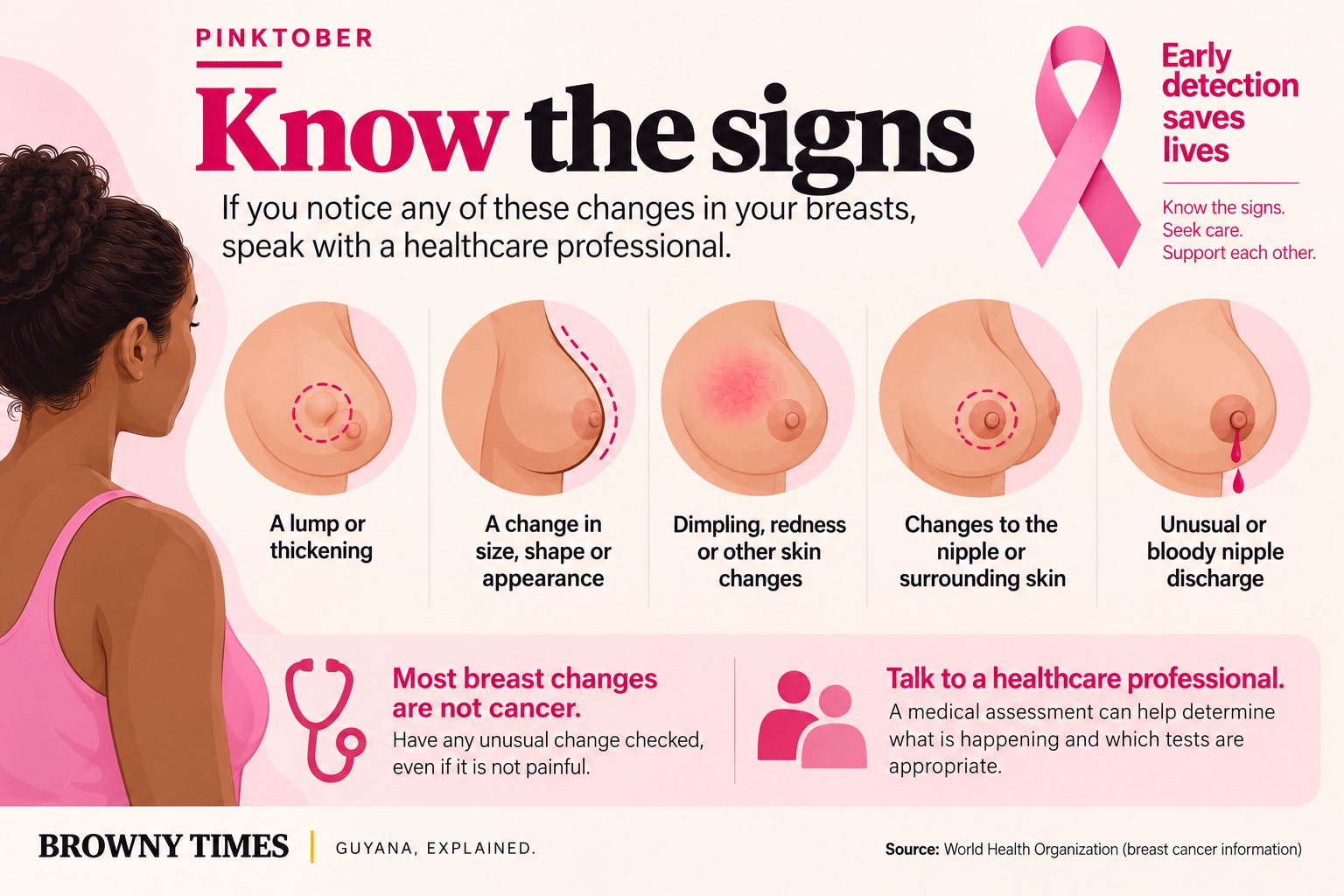
Breast changes are not always a sign of cancer, but they should not be ignored. A medical assessment is important even when there is no pain.
Family history can increase breast cancer risk, although most women diagnosed with the disease have no known family history. Men can also develop breast cancer, although it is uncommon.
Mammography screening looks for signs of cancer before symptoms appear. If you have already noticed a change, a medical consultation can help determine which tests are appropriate. Screening recommendations vary according to age, medical history and individual risk.
Supporting someone is part of care
Support can be practical.
It may mean offering transport to an appointment, helping with childcare, accompanying someone to a consultation or simply making time to listen.
Ask what would be helpful, respect the person’s choices and protect their privacy.
Pinktober ends on October 31, but recognising changes, seeking timely care and supporting people through diagnosis and treatment matter throughout the year.