MV Barima had 16 deficiencies eight months before sinking
A November 2025 inspection found 16 deficiencies. The inspector says he was never told to re-check.

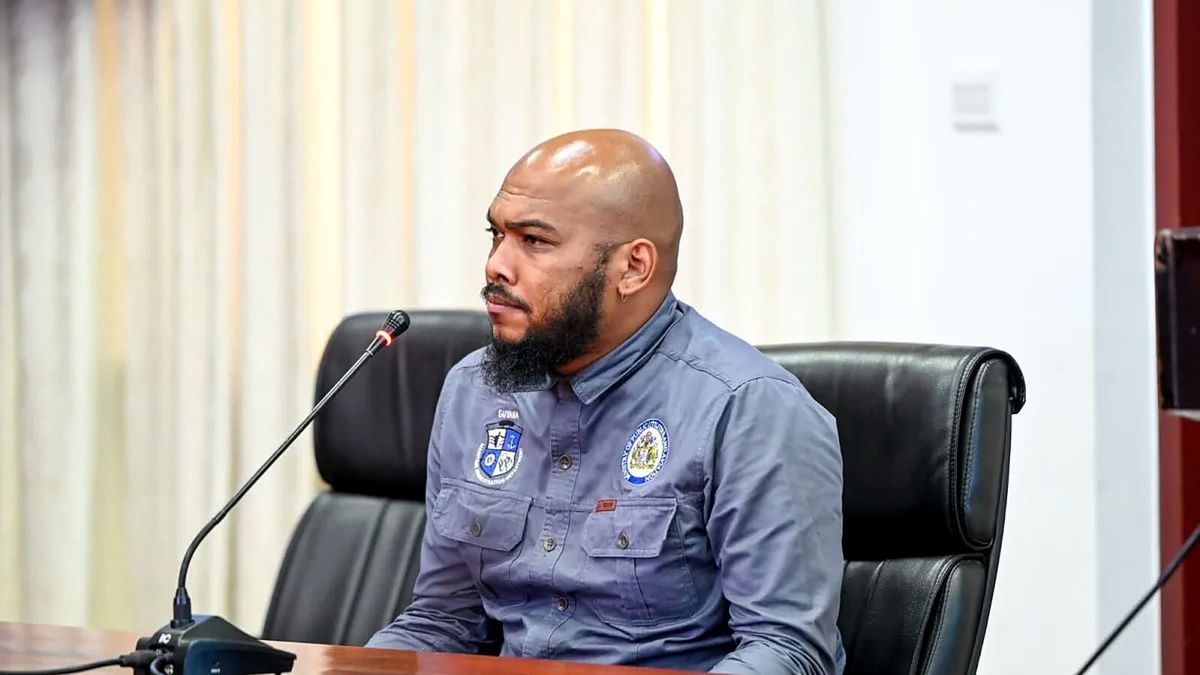
GEORGETOWN — A Maritime Administration Department (MARAD) inspector recorded 16 deficiencies aboard the MV Barima during an inspection in November 2025, but received no instructions to return and check whether they had been corrected before the ferry sank eight months later, he told the Commission of Inquiry on Tuesday.
Christopher Bailey, MARAD's Surveyor of Ships and Acting Marine Superintendent, told the Commission that he inspected the state-owned ferry on November 17, 2025, while it was docked for maintenance and not operating.
Bailey had been with MARAD for three months at the time. He submitted his findings to the department's Director of Safety, and the report was marked as seen on November 19.
The MV Barima capsized on July 18, 2026, while travelling from Georgetown to Port Kaituma. More than 100 people died or remain missing.
What the inspection found
The deficiencies included liferafts overdue for servicing and an Emergency Position-Indicating Radio Beacon (EPIRB) with an expired battery. The vessel had no Automatic Identification System (AIS), and documentation for its crane was unavailable.
Bailey said the GPS and VHF radio were working, while fire and smoke detectors were tested and found satisfactory.
He reported seeing approximately 200 to 250 life jackets in the passenger area. They had reflective material and whistles but no lights.
Commissioners questioned why he had not recommended detaining the vessel over the overdue liferafts.
Bailey acknowledged that he had not recommended stopping the ferry on that basis. He maintained, however, that he had not authorised it to sail and that it was undergoing maintenance at the time of his inspection.
He described his examination as visual checks and equipment tests rather than a detailed structural survey. He found no visible damage in the areas examined and assessed the vessel's condition as fair.
Several certificates were marked "not seen". Bailey explained that this meant the documents were not found aboard during his visit, not necessarily that they had never been issued.
He also said he understood the state-owned vessel to be exempt from mandatory inspection under the regulations he applied, although MARAD conducted the examination as part of its safety responsibilities. Commissioners questioned that interpretation and the legal requirements applicable to the ferry.
No instructions to recheck
Bailey explained that the usual procedure was for an operator to be notified of deficiencies, undertake corrective work and inform MARAD, after which inspectors could return to verify the repairs.
In the Barima's case, he said he received no instructions to carry out a follow-up inspection.
His testimony did not establish whether the Transport and Harbours Department received the findings, whether repairs were made or whether another MARAD official inspected the vessel.
Bailey also acknowledged that he had not reviewed the ferry's earlier inspection reports, including one from 2024.
What the Commission is examining
The Commission, chaired by Belizean jurist Godfrey Phillip Smith, has not determined whether the deficiencies identified in November 2025 contributed to the sinking.
It is examining what action followed the inspection report, which legal requirements applied to the vessel and whether shortcomings in regulatory oversight played a role.
For now, the central unanswered question is what happened after MARAD received the report and whether the identified safety concerns were addressed before the ferry returned to service.