
GPHC completes 100 robotic-assisted surgeries
Guyana's Georgetown Public Hospital Corporation has completed 100 robotic-assisted surgical procedures since launching its programme in May 2026, marking a new step in the country's adoption of advanced surgical technology.

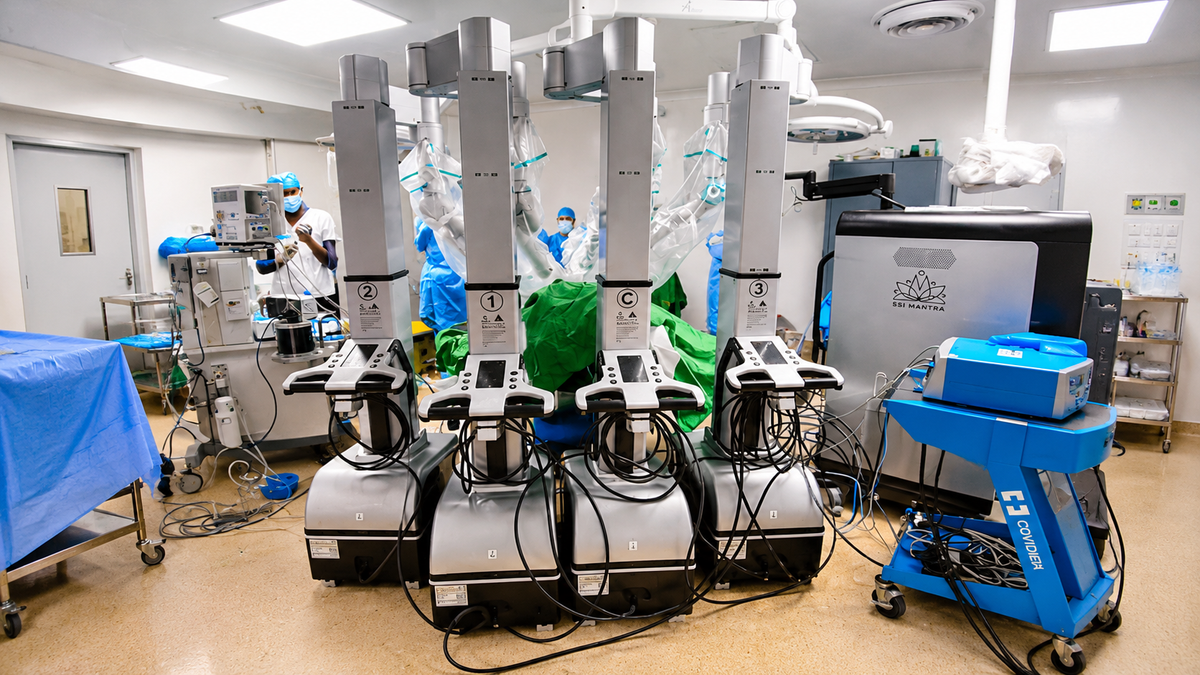
The programme, launched on May 26, 2026, has recorded procedures in general surgery, urology and gynaecology. The introduction of this technology creates new possibilities for patients while raising important questions about medical training, access and the evaluation of clinical outcomes.
The Georgetown Public Hospital Corporation (GPHC) has completed 100 robotic-assisted surgical procedures since launching its programme on May 26, 2026. The milestone marks another step in the introduction of specialised surgical technology into Guyana’s public healthcare system.
The hospital announced the achievement on October 31 through its official channels. The procedures span three medical specialties: general surgery, gynaecology and urology.
Of the 100 procedures recorded, 47 were performed in general surgery, 34 in gynaecology and 19 in urology. This represents an average of approximately four procedures per week during the little over five months since the programme began.
Three Specialties, 100 Procedures
General surgery accounts for 47 procedures, including cholecystectomies (removal of the gallbladder), inguinal hernia repairs, colectomies (partial removal of the large intestine) and single-anastomosis gastric bypass procedures. The latter is a form of bariatric surgery used in selected patients for the treatment of obesity.
Gynaecology accounts for 34 procedures, including ovarian cystectomies (removal of ovarian cysts), total hysterectomies (removal of the uterus), salpingectomies (removal of one or both fallopian tubes) and bilateral salpingo-oophorectomies (removal of both ovaries and fallopian tubes).
Urology recorded 19 procedures. These included prostatectomies, nephrectomies (removal of a kidney), repairs of vesicovaginal fistulas, varicocelectomies (treatment of enlarged veins around the testicles), pyeloplasties to correct obstructions affecting kidney drainage, and procedures to facilitate the drainage of kidney cysts.
The distribution shows that the robotic system is already being used across different types of abdominal, pelvic and urological procedures. However, GPHC has not specified how many operations were related to cancer diagnoses or how many were elective or emergency procedures.
From the First Operations to a Multidisciplinary Programme
The programme began on May 26, 2026, during activities marking Guyana's Independence anniversary, with the introduction of the SSI Mantra 3 system.
The launch day included a cardiac procedure performed through telesurgery by surgeon Sudhir Srivastava, who operated from Georgetown on a patient located in India. Authorities presented the procedure as a milestone because of the distance between the surgeon and the patient.
On the same day, a local team led by surgeon Hemraj Ramcharran, alongside Bibi Hussain and Jagnanand Ramnarine, performed a robotic-assisted inguinal hernia repair. The procedure was presented as the first robotic-assisted surgery performed by a Guyanese surgeon in Guyana.
Srivastava also participated in the repair of an atrial septal defect, a congenital heart condition, in a Guyanese patient.
Between June 1 and 5, the urology, gynaecology and general surgery departments began performing their first procedures using the system. The activities included supervision from international specialists and technical support relating to the operation of the equipment. Operating theatre personnel also received specialised training.
GPHC has not clarified whether the cardiac procedures performed on May 26 are included in the total of 100. Therefore, the figure announced should be attributed to the specialties expressly identified in the hospital's communication.
What Does This Technology Mean for Patients?
Robotic-assisted surgery allows surgeons to control surgical instruments through a console connected to mechanical arms and a camera that provides enlarged, three-dimensional images of the area being operated on.
Despite the term, the robot does not perform operations independently or make medical decisions. The surgeon controls the instruments, directs every movement and remains responsible for the procedure.
The technology can make minimally invasive operations easier, particularly in areas of the body that are difficult to access. In certain cases, the use of more precise instruments and smaller incisions may reduce tissue trauma, post-operative pain and recovery time.
However, the benefits depend on the type of operation, the patient's medical condition and the experience of the surgical team. Robotic-assisted surgery does not guarantee better outcomes in every case, nor does it automatically replace conventional surgical techniques.
The United States Food and Drug Administration (FDA) explains that computer-assisted surgical systems must be used appropriately by properly trained professionals. It also recommends that patients discuss the risks, benefits and available alternatives with their doctors.
Ultimately, the medical team is responsible for determining which surgical approach is most suitable for each patient.
Medical Training and Building Local Capacity
Expanding medical training is one of the next steps in the programme. GPHC has announced plans to train additional surgeons in general surgery, urology and gynaecology to strengthen local expertise in using the system.
During the initial presentation of the programme, the hospital reported that seven doctors had completed robotic surgery training. International specialists were also expected to work alongside Guyanese medical teams as the programme develops.
The Government has also proposed establishing an international robotic surgery training centre at GPHC, with the aim of training professionals from Guyana and other Caribbean countries.
Building these skills will be important for the long-term continuation of the service. Having more trained surgeons could increase the hospital's capacity and reduce reliance on a small group of specialists.
The Challenge: Access, Sustainability and Measurable Results
The introduction of advanced technology into the public hospital system also raises questions about patient access and the sustainability of the service.
At the launch of the programme, it was announced that the procedures would be offered to patients at no direct cost. However, the communication announcing the first 100 operations did not provide an update on access arrangements, patient selection criteria or possible waiting times.
Detailed information has also not been released on complications, conversions to open surgery, hospital stays or recovery times. The information published about the milestone does not include a comparison between robotic-assisted surgery and existing laparoscopic or conventional techniques.
These indicators will be necessary to determine whether the introduction of the system is improving surgical care and what specific benefits it is providing to patients.
The first 100 procedures represent progress in the modernisation of Guyana's medical services. The next step will be to strengthen this capacity through specialised training, appropriate patient access and continued monitoring of clinical outcomes.
Beyond the technology installed, the programme's impact will depend on its ability to deliver safe, sustainable care supported by measurable results.